Introduction to a Historical Botanical Mention
Giloy, known scientifically as Tinospora cordifolia, is a climbing vine plant that appears in the historical records of India’s traditional wellness systems. This article provides informational and educational content only, examining what ancient texts and modern research literature document about this botanical specimen. It is not medical advice and contains no treatment recommendations.
Historical Documentation and Cultural Context
Appearance in Ancient Texts
References to a plant known as Giloy or Guduchi can be found in classical Ayurvedic literature that dates back several centuries. These writings form part of India’s rich history of documenting local flora within a holistic philosophical framework.
Cultural and Linguistic Significance
The plant carries the Sanskrit synonym “Amrita,” which translates to “nectar of immortality.” This name reflects its revered status within historical texts, not a description of its biological properties. Across different regions of India, the plant is known by various local names.
Botanical Description and Growth Habitat
Physical Characteristics
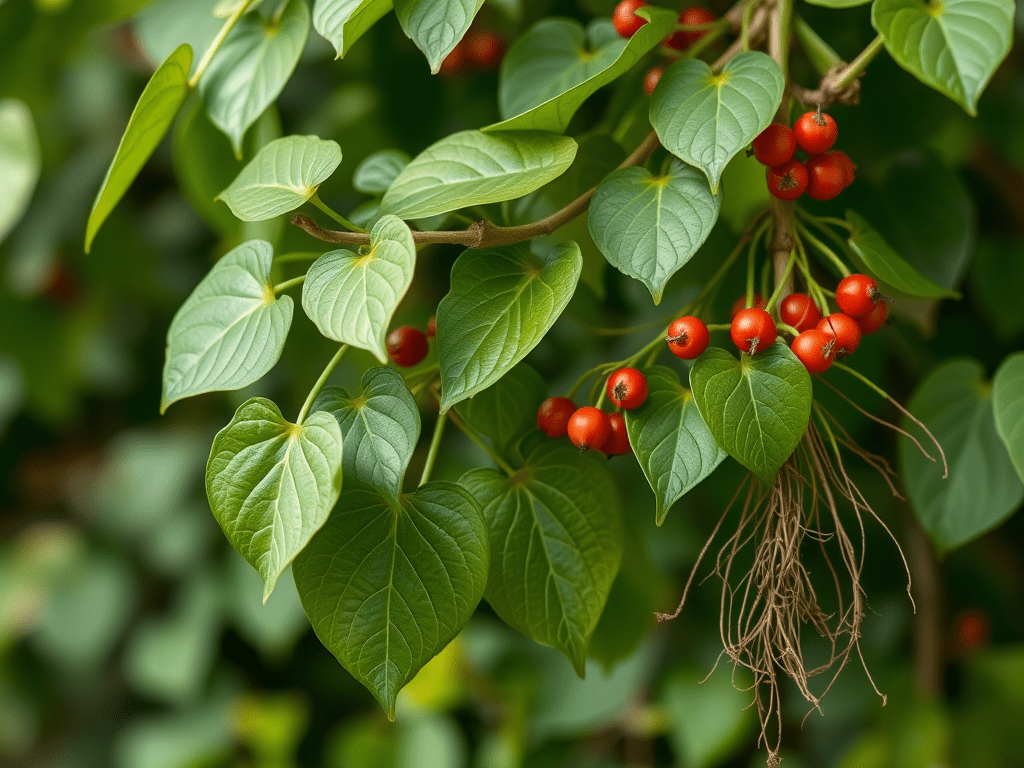
Giloy is a deciduous, climbing shrub that can be identified by:
- Heart-shaped leaves with prominent veining
- Succulent, cylindrical stems that are greyish in color
- Aerial roots that help it climb supporting trees or structures
- Small, pea-sized fruits that turn red when mature
Natural Habitat and Distribution
This plant grows naturally in tropical regions of the Indian subcontinent, typically in forests and rural areas. It is a hardy species that can adapt to various soil conditions.
Modern Scientific Examination
Research Overview
Contemporary scientific studies have analyzed Tinospora cordifolia to understand its chemical composition. Most current research represents preliminary investigation rather than established clinical application.
Documented Chemical Constituents
Scientific literature has identified various compounds in this plant. The table below summarizes some findings for educational context:
| Compound Category | Example Compounds | General Research Context |
|---|---|---|
| Alkaloids | Berberine, Palmatine | Basic phytochemical analysis |
| Diterpenoids | Tinosporone, Tinosporic acid | Compound isolation studies |
| Glycosides | Cordioside, Tinocordiside | Preliminary biological activity research |
| Polysaccharides | Arabinogalactan | Immunomodulatory mechanism studies |
Important Note: Identifying these compounds represents chemical analysis conducted in laboratory settings. This does not constitute evidence of health benefits in humans.
Traditional Preparation Methods (Historical Context)
Historical texts describe various traditional preparation methods. These are documented historical practices, not modern recommendations:
Historical Preparations Mentioned:

- Kashaya (Decoction): Boiling stems in water
- Churna (Powder): Dried and powdered stems
- Swaras (Fresh Juice): Expressed from stems
- Satva: Starch extracted from stems
Critical Safety Information and Considerations
Essential Safety Warnings
Absolute Contraindications:
- Pregnancy and Breastfeeding: Historical texts and modern research literature consistently advise against use during these periods.
- Autoimmune Conditions: Theoretical concerns exist regarding immune system interaction.
- Pre-Surgical Period: Typically discontinued two weeks before any scheduled surgery.
General Precautions:
- Not for self-administration or home experimentation
- Potential for herb-drug interactions exists
- May affect blood sugar regulation
- Can influence immune system parameters
Professional Guidance Requirement
Any consideration of traditional botanical substances should occur under the supervision of qualified healthcare practitioners familiar with both traditional systems and evidence-based medicine.
Contemporary Research Landscape
Current Scientific Inquiry
Modern researchers continue to study Tinospora cordifolia in various contexts:
- Phytochemical Analysis: Identifying and characterizing plant compounds
- Pharmacological Studies: Laboratory investigations of biological activity
- Toxicological Evaluation: Assessing safety parameters
- Clinical Trials: Limited human studies exploring potential applications
Research Institutions and Botanical Science
Organizations like the National Institute of Science Communication and Policy Research (NIScPR) and various university botany departments contribute to the scientific understanding of traditional medicinal plants through peer-reviewed research.
Conclusion: Understanding Traditional Botany
Giloy represents one of many plants documented in India’s historical wellness traditions. Its continued presence in both cultural heritage and scientific literature makes it a subject of ongoing interest for ethnobotanists and researchers.
The relationship between traditional plant knowledge and modern scientific validation remains complex. Individuals interested in botanical approaches to wellness should prioritize:
- Consulting qualified healthcare providers
- Relying on evidence-based medicine for health decisions
- Understanding the distinction between historical documentation and clinical recommendation
- Recognizing that traditional use does not equate to modern therapeutic application
Disclaimer: This article is for educational and informational purposes only. It reviews historical documentation and scientific literature but does not provide medical advice, diagnosis, or treatment recommendations. Never disregard professional medical advice or delay seeking it because of information presented here. The authors and website do not endorse the use of Giloy or any herbal remedy without professional medical supervision. Always consult with a qualified healthcare provider before making any health-related decisions.
Article written by Mahesh Borsaniya, founder of Borsaniya Wellness Spot. Our mission is to provide trustworthy, evidence-based wellness information rooted in natural and holistic traditions.
Read More Health Article – Click HERE



Leave a Reply
You must be logged in to post a comment.