Introduction: Exploring a Plant’s Historical Significance
Euphorbia hirta, commonly referred to as the “Asthma Plant” or “Dudheli,” represents a botanical specimen with notable historical documentation. This article provides purely educational information about what historical records and scientific literature mention. Importantly, this content does not offer medical advice or treatment recommendations.
Botanical Characteristics and Widespread Distribution
Recognizing the Plant
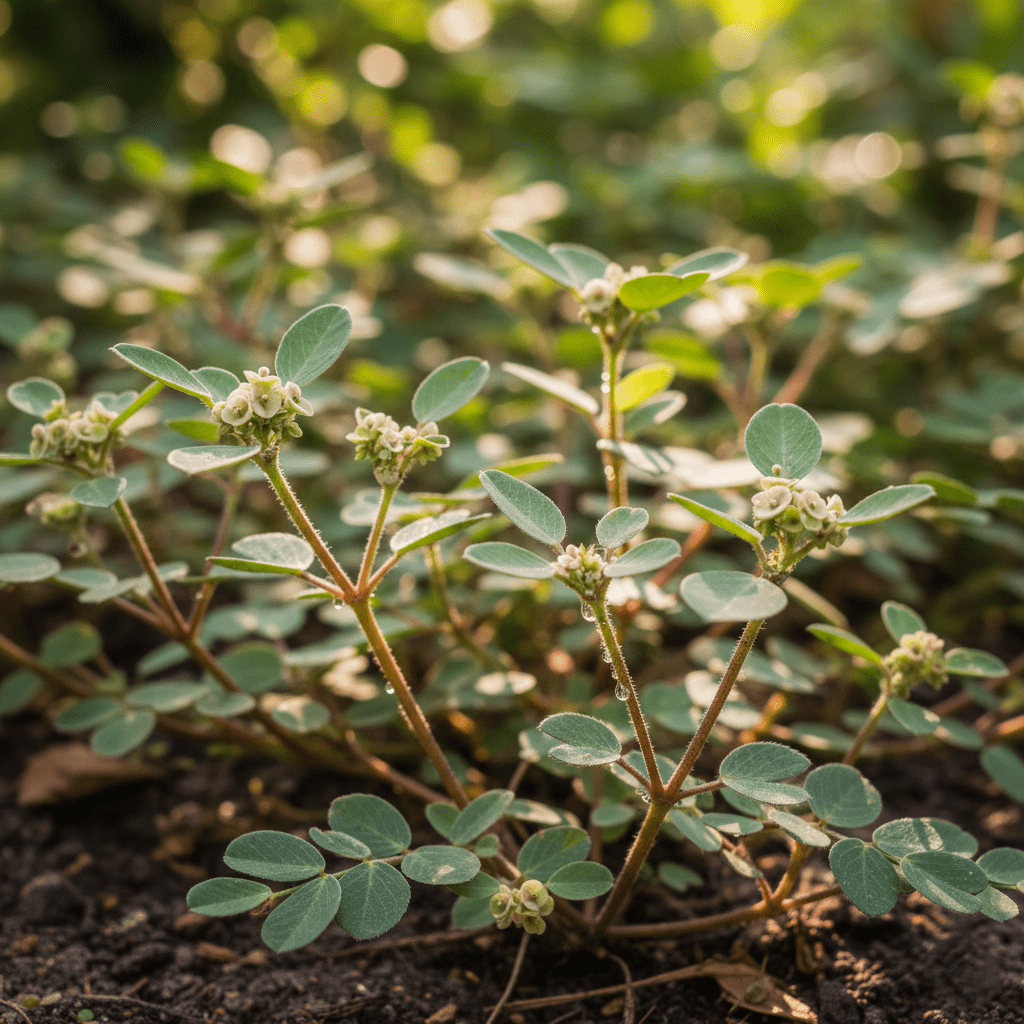
Euphorbia hirta is a small, annual herb that typically thrives in tropical climates. Notably, it produces a characteristic milky latex when cut, which aligns with features of the broader Euphorbia plant family.
Global Presence and Adaptation
This plant demonstrates remarkable adaptability, appearing in diverse habitats worldwide. For instance, it grows in roadsides and fields across Asia, Africa, and parts of the Americas. Consequently, its widespread presence has led to recognition in various cultural traditions.
Historical Documentation and Cultural Context
References in Traditional Records
Various historical wellness systems have documented Euphorbia hirta in their traditional texts. However, these references represent historical cultural knowledge rather than validated modern medical applications.
Cultural Integration Across Regions
The plant carries numerous regional names, reflecting its geographical spread. In India, people sometimes call it “Dudheli,” while English-speaking regions know it as the “Asthma Plant” due to its historical associations.
Scientific Examination and Compound Analysis
Current Research Landscape
Modern scientific studies have analyzed Euphorbia hirta to understand its chemical composition. Currently, research remains primarily preliminary, with most investigations occurring in laboratory environments rather than clinical settings.
Identified Chemical Components
Researchers have identified various compounds in Euphorbia hirta that warrant scientific interest. The following table summarizes some findings for educational context only:
| Compound Category | Example Compounds | General Research Focus |
|---|---|---|
| Flavonoids | Quercetin, Quercitrin | General antioxidant properties |
| Phenolic Compounds | Gallic acid | Basic biological activity studies |
| Phytosterols | β-Sitosterol | Preliminary anti-inflammatory mechanisms |
| Triterpenoids | β-Amyrin, Taraxerol | Cellular interaction research |
Crucially, identifying these compounds represents chemical analysis, not evidence of human therapeutic benefits. Therefore, comprehensive clinical trials remain necessary before considering any applications.
General Areas of Scientific Investigation
Scientists have explored several aspects of Euphorbia hirta through controlled studies:
1. Laboratory-Based Examinations
Preliminary research has tested plant extracts in laboratory settings to observe basic biological interactions. However, these findings require further validation.
2. Animal Study Research
Limited animal studies have occurred under specific research conditions. Importantly, results from animal research cannot directly apply to human health without extensive clinical testing.
3. Compound Isolation and Analysis
Researchers have isolated various compounds primarily for analytical chemistry purposes, contributing to broader botanical science knowledge.
Essential Safety Information and Precautions
Critical Safety Considerations
Pregnancy and Breastfeeding:
- Historical texts and some research indicate potential concerns
- Therefore, absolute avoidance is essential during pregnancy and breastfeeding
General Safety Measures:
- This plant is unsuitable for self-experimentation
- The milky latex may irritate skin and eyes
- Individual allergic reactions remain possible
- Potential medication interactions could occur
Necessity of Professional Supervision
Historically, any use occurred within specific cultural frameworks under practitioner guidance. Similarly, modern consideration requires supervision by qualified healthcare professionals knowledgeable about botanical substances.
Conclusion: Reflecting on Botanical Documentation
Euphorbia hirta offers an interesting case study in traditional botanical documentation. Its presence in historical records across cultures illustrates how plants integrate into human understanding of nature.
Meanwhile, ongoing scientific research into its chemical composition advances botanical knowledge. However, botanical research distinctly differs from medical recommendation.
For individuals considering plant-based wellness approaches, responsible practice involves:
- First, consulting qualified healthcare providers
- Then, relying on evidence-based medicine for health decisions
- Finally, distinguishing between historical documentation and modern medical practice
Disclaimer: This article serves educational and informational purposes only. While it reviews historical and scientific literature, it does not provide medical advice, diagnosis, or treatment recommendations. Never disregard professional medical advice or delay seeking it based on information presented here. The authors and website do not endorse using Euphorbia hirta or any herbal remedy without professional medical supervision. Always consult a qualified healthcare provider before making health-related decisions.
Article written by Mahesh Borsaniya, founder of Borsaniya Wellness Spot. Our mission is to provide trustworthy, evidence-based wellness information rooted in natural and holistic traditions.
Read More Article – Click HERE


Leave a Reply
You must be logged in to post a comment.